How to Write an Effective Explanatory Note: Practical Steps for Any Situation
When a mistake at work, school, or home needs a clear, concise explanation, an explanatory note—often called a “объяснительная записка” in Russian—provides the official record. It tells the reader what happened, why it happened, and what will be done to prevent recurrence, all while maintaining a professional tone.
Why a Well‑Crafted Note Matters
Employers, teachers, and administrators rely on these documents to assess accountability and to decide on next steps. A properly formatted note can:
- Demonstrate responsibility and transparency.
- Speed up the decision‑making process by presenting facts upfront.
- Protect the writer from misunderstandings or unfounded accusations.
Key Elements Every Explanatory Note Should Contain
Even a brief note follows a predictable structure. Including each element ensures the recipient has the full picture without needing follow‑up queries.
- Header – Date, your name, position, and the addressee’s details.
- Subject line – A short phrase such as “Explanation for Missed Deadline – Project X”.
- Opening statement – Directly state the purpose (“I am writing to explain the delay in delivering…”).
- Chronology of events – List the facts in the order they occurred, using concrete data (e.g., timestamps, system logs).
- Root cause analysis – Identify the primary reason, avoiding vague excuses (“The server outage on 12 May caused…”).
- Corrective actions – Detail steps already taken and future measures to avoid repetition.
- Closing – Offer to discuss further and sign off with a courteous phrase.
Sample Layout in Practice
The image below illustrates a typical Russian‑style explanatory note, highlighting how each section is visually separated for quick reference.
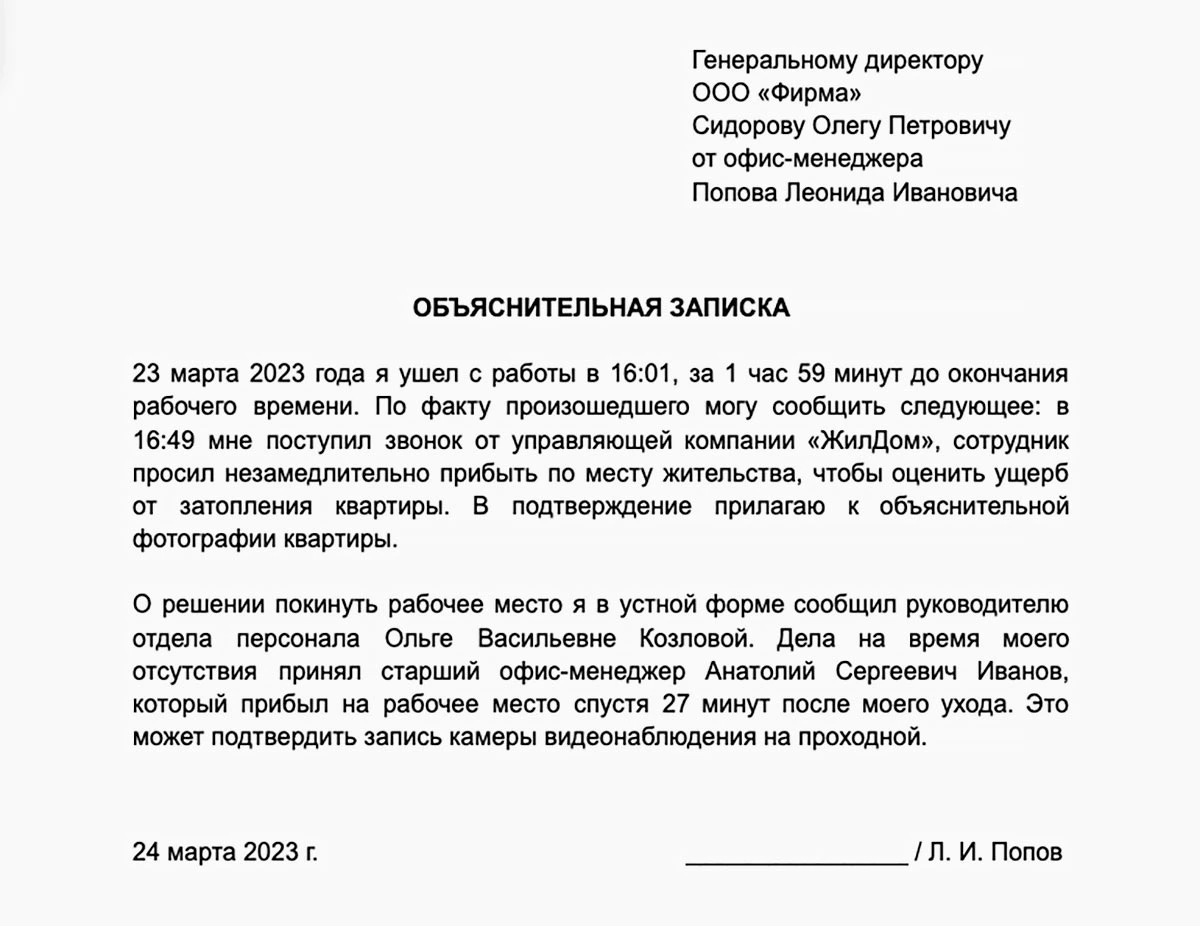
Notice the bolded headings, the use of a neutral tone, and the inclusion of specific dates. Replicating this format in English works just as well, especially when you replace the Russian headings with their English equivalents.
Common Mistakes to Avoid
Even seasoned professionals slip up. Here are pitfalls that dilute credibility:
- Over‑apologizing – Excessive apologies shift focus from solutions to remorse.
- Blaming others – Pointing fingers erodes trust; own the part you can control.
- Vague language – Words like “technical issues” without specifics leave readers guessing.
- Lengthy narratives – Keep it under one page; long stories obscure the core message.
Actionable Takeaways for Immediate Use
Apply these quick steps the next time you need to draft an explanatory note:
- Open a blank document and insert a table for the header; this ensures alignment.
- Write the subject line in bold, capitalizing only the first word of each major term.
- Summarize the event in one sentence, then expand with a numbered list of facts.
- Identify the single most impactful cause—avoid a laundry list of minor issues.
- Commit to a concrete, measurable remedy (e.g., “I will implement daily backups starting 15 June”).
- Proofread for neutral tone; replace “I’m sorry” with “I acknowledge”.
- Save the final version as PDF to preserve formatting before sending.
Implications for Workplace Culture
When employees consistently submit clear explanatory notes, managers gain a reliable audit trail. This transparency encourages a culture where mistakes are addressed openly rather than hidden, ultimately boosting overall productivity and morale.